

Playfina casino Plinko game
Introduction
Plinko looks almost disarmingly simple at first glance. A ball drops from the top of the board, bounces off a field of pegs, and lands in one of several payout slots at the bottom. That is the entire visual idea. Yet in practice, Plinko creates a very specific type of gambling session: fast, highly readable, and emotionally uneven in a way that many players notice almost immediately. On the Playfina casino Plinko page, this format stands out because it removes the layers that usually come with slot reels, bonus rounds, symbols, paylines, and themed presentation. What remains is pure distribution of chance, shown in real time.
That stripped-back structure is exactly why the format attracts attention. I see Plinko as one of the clearest examples of a casino game that looks casual on the surface but can feel surprisingly intense once real stakes are involved. Every drop is short, every outcome is visible, and every setting change can alter the tone of the session. For players in Australia who want to understand whether Playfina casino Plinko is worth trying, the key is not whether the interface looks easy. The key is what that simplicity means in actual play: pace, variance, hit frequency, and the psychological effect of chasing a rare top multiplier.
In this review, I will stay focused on the game itself. I will explain how Plinko works, why its rhythm feels different from slots and table games page for active Playfina Casino players, what the risk settings really change, and where the practical strengths and limitations of this format become obvious.
What Plinko is and why it attracts so much attention
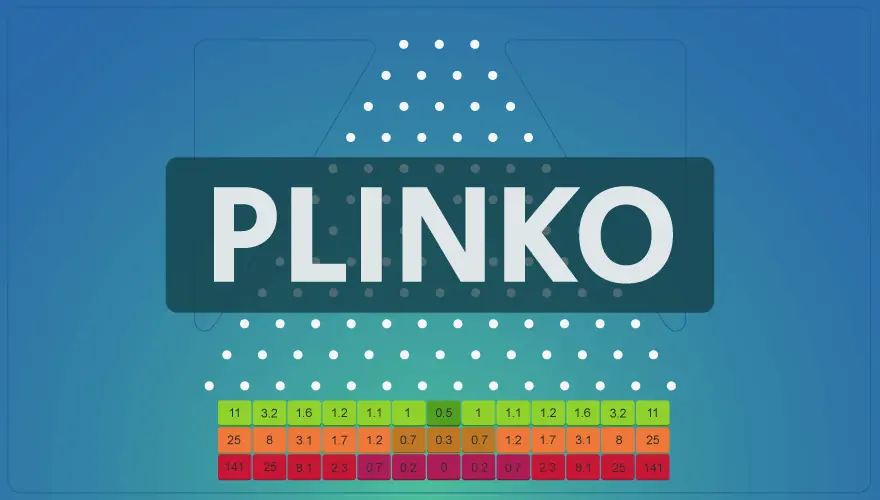
Plinko is a chance-based drop game built around a vertical pegboard. The player chooses a stake, usually selects the number of rows and a risk level, and then releases one or multiple balls from the top. As the ball hits each peg, it deflects left or right until it reaches one of the payout zones at the bottom. Those bottom slots carry different multipliers, with the largest values usually placed near the edges and the more common low-return zones concentrated around the centre.
Its appeal comes from clarity. In a slot, many players do not fully understand what is happening under the hood because the result is wrapped inside reels, animations, and layered features. In Plinko, the path is visible. You can literally watch randomness unfold. That transparency creates a stronger sense of involvement, even though the underlying result is still governed by the game’s random system.
There is another reason Plinko became so noticeable across modern casino platforms: it compresses suspense into a few seconds. A slot spin may include anticipation effects, reel delays, and feature reveals. Plinko does not need that. The tension comes from the ball’s path itself. The moment when it bounces toward the far edge and then gets knocked back toward the middle is often more emotionally effective than a long animated spin. It is simple to understand, but not emotionally flat.
One observation I keep returning to is this: Plinko often feels less like “spinning for an outcome” and more like “watching probability miss or connect in front of you.” That difference matters. It changes how players interpret streaks, dry runs, and near-misses.
How the Plinko mechanic actually works
To understand Playfina casino Plinko properly, you need to separate the visual path from the payout structure. The ball appears to move freely through the board, but the game is designed around a statistical distribution. Most outcomes cluster toward the middle because repeated left-right deviations naturally produce a bell-shaped spread. Extreme edge results are possible, but much less frequent. That is why the largest multipliers are usually placed on the outer ends: they correspond to the least common landing zones.
In practical terms, a standard session usually revolves around four adjustable elements:
Stake size — the amount risked per drop.
Risk level — often low, medium, or high, affecting the payout curve.
Rows — the depth of the board, which changes distribution and multiplier spread.
Drop mode — manual single drops or faster repeated drops, depending on interface options.
The risk setting is especially important. It does not simply make the game “better” or “worse.” It reshapes how often smaller returns appear and how extreme the top-end multipliers can become. Lower risk usually means more balanced bottom slots, more modest swings, and fewer dramatic peaks. Higher risk tends to widen the gap between common outcomes and rare premium results. That creates a session with more pronounced highs and longer stretches of low-value landings.
The number of rows also matters more than many newcomers expect. With fewer rows, the board is shorter and outcomes resolve quickly, but the distribution can feel less stretched. With more rows, the path becomes longer and the multiplier map often becomes more aggressive, especially at higher risk settings. In other words, rows are not just a cosmetic preference. They influence both the visual feel and the mathematical profile of the round.
| Setting | What it changes | What it means in practice |
|---|---|---|
| Low risk | Flatter payout distribution | More stable sessions, fewer dramatic spikes |
| Medium risk | Balanced spread between common and rare outcomes | Useful for learning the rhythm without extreme swings |
| High risk | Sharper gap between centre and edge multipliers | Higher variance, longer dry stretches, stronger top-end chase |
| Fewer rows | Shorter path and simpler spread | Faster visual resolution, often less dramatic progression |
| More rows | Longer path and wider multiplier structure | More tension per drop, usually more pronounced distribution effects |
Here is the practical takeaway: Plinko is not one fixed experience. The same interface can feel calm, repetitive, sharp, or punishing depending on how the board is configured.
Why the game feels engaging and how its tempo works in real sessions
Plinko’s rhythm is one of its strongest selling points, but it is also one of the main reasons players can misread it. Because each round is short and visually direct, the session can move much faster than it feels. There is no reel build-up, no symbol reading, and no feature explanation slowing things down. You place a stake, release a ball, get a result, and often repeat within seconds.
That speed creates a clean feedback loop. You always know what happened. You do not need to interpret paylines or bonus conditions. The game tells you everything immediately through the landing slot and multiplier. For many players, this makes Plinko easier to process than a slot. But ease of reading should not be confused with low intensity. A fast loop can increase exposure to variance simply because more rounds are completed in less time.
Another memorable detail about Plinko is that it creates visible “false hope” without using traditional casino theatrics. When a ball drifts toward a high multiplier edge and then clips back into a central slot, the moment feels personal, even though the outcome is random. That visual near-miss effect is one reason the game can hold attention so effectively.
On the Playfina casino Plinko page, this matters because the game can suit two very different habits. Some players use it for short, controlled sessions with small stakes and low risk. Others treat it as a high-variance chase format, increasing rows and risk in search of rare big multipliers. The interface may look the same, but the session profile is completely different.
How risky Plinko really is and who it suits best
Plinko can be relatively gentle or aggressively swingy depending on settings, but it is never a format I would describe as strategically controllable. This is not blackjack, where decisions affect expected outcomes in a meaningful way. It is also not a traditional slot where the volatility is fixed in the background and the player mostly adjusts bet size. In Plinko, the player often actively chooses the volatility profile before dropping the ball.
That choice is useful, but it can also be misleading. Some players see the risk selector as a way to “improve” their chances. In reality, it is a way to choose the shape of uncertainty. Low risk does not guarantee profit. High risk does not make top multipliers likely. It only changes how the distribution behaves over time.
In my view, Plinko is best suited to players who:
prefer short rounds and immediate outcomes;
want a visually transparent format rather than layered slot presentation;
understand that rare multipliers may take a long time to appear;
are comfortable managing bankroll pace in a rapid session environment.
It may be a poor fit for players who need narrative progression, bonus features, expanding mechanics, or a stronger sense of development across a session. Plinko does not “build” toward anything. Each drop is a fresh event. If a player enjoys the gradual tension of feature triggers, free spins at Playfina Casino, or interactive bonus rounds, this format may feel too bare.
That is one of the more important truths about the game: Plinko is exciting because it removes clutter, but that same simplicity can make it feel repetitive if the player expects variety rather than pure probability in motion.
What players should understand about probabilities, streaks, and realistic outcomes
The most common mistake with Plinko is to overreact to short-term patterns. Because the ball path is visible, players often feel they are seeing momentum or directional tendencies. In reality, each drop is an independent event governed by the game’s random logic. A sequence of central landings does not mean an edge multiplier is “due.” Likewise, one rare hit does not signal that another is close.
This matters because the game’s visual design can create a stronger illusion of pattern than many slots do. In a slot, randomness is abstracted behind reels. In Plinko, randomness is staged as movement. The brain naturally tries to read that movement as a trend. Experienced players should resist that impulse.
It is also important to understand that the highest multipliers are usually statistical outliers, not routine targets. They are there to define the ceiling of the game, not the average session. If a player enters Plinko expecting frequent premium returns, disappointment arrives quickly. If they enter it understanding that most drops will land in modest zones and occasional larger results are the exception, the experience becomes easier to judge honestly.
| Common expectation | What usually happens in practice |
|---|---|
| The ball looked close to the edge, so a big result was likely | Visual proximity does not change the probability of the final slot |
| Several average drops mean a major multiplier is due | Independent rounds do not build toward a guaranteed premium hit |
| High risk means better rewards overall | High risk increases spread, not consistency |
| Simple interface means easy bankroll control | Fast rounds can accelerate losses if the pace is not managed |
For real-money sessions, the practical lesson is simple: treat Plinko as a probability distribution tool, not as a pattern-reading exercise. Once a player accepts that, the game becomes easier to use responsibly.
How Plinko differs from slots and other casino games
The clearest difference between Plinko and classic online slots is structural. Slots are built around symbol combinations, reel sets, RTP models, and feature layers such as wilds, scatters, respins, and free spins. Plinko removes almost all of that. It offers a direct route from stake to outcome with very little thematic packaging in between.
Compared with roulette, Plinko shares the idea of a simple result map, but the presentation is more kinetic. Roulette resolves through a spinning wheel and fixed bet types. Plinko resolves through a visible descent that creates a stronger impression of physical randomness. Compared with crash games, Plinko is less about deciding when to cash out and more about accepting a pre-generated distribution path. Compared with dice-style games, it is more visual and emotionally textured, even if the mathematical principle is still rooted in random outcomes. A quick read of Aviator crash game details answers most questions about limits and account settings.
The appeal of Playfina casino Plinko rests on a middle ground that few games occupy: it offers the instant clarity of a low-complexity table format while adding a kinetic, physics-driven flow that number-based games lack. Compared with slots, where paylines and feature triggers sit behind symbol combinations, Plinko presents its outcome as a single visible descent of a ball through a peg field, so the result reads in one glance. That said, it does not carry the layered bonus rounds or free-spin mechanics that slots typically use to stretch engagement; in most cases, a slot will offer more structural depth, whereas Plinko trades that depth for transparency. Against a dice roll, Plinko wins on spectacle, but it sacrifices the clean probability framing that dice players rely on, since the ball's path is influenced by peg collisions and edge deflection rather than a single random draw. Payout multipliers in Plinko commonly cluster toward the middle of the board, with the outer lanes paying far less frequently — a distribution that rewards patient, smaller-stakes play over aggressive high-lane chasing. Session pacing also differs: a slot round can pause for animations or bonus triggers, while Plinko resolves quickly, making it a faster cadence for players who prefer a steady rhythm without interruption. For a player weighing the two, Plinko suits those who want the visual feedback of a mechanical game without committing to the rulebook of a modern video slot, and who accept that its variance sits somewhere between the predictable low of a dice roll and the spike-heavy swings of a feature-packed slot.
At the same time, players should not mistake visual transparency for strategic depth. Plinko is clearer than a slot, not smarter than one. The decision-making layer is limited mostly to stake sizing and board configuration.
Practical strengths and weaker points of Plinko
Plinko has genuine strengths, and they are easy to identify once you spend time with the format. First, it is accessible. New players understand the premise within seconds. Second, it is efficient. The game communicates results instantly. Third, the risk controls can make the same product feel meaningfully different from one session to another. That flexibility is not trivial; it gives players a way to align the game with their own tolerance for swings.
There is also a strong observational advantage: Plinko teaches players to think in distributions. That may sound abstract, but it is useful. Unlike some heavily themed casino products that hide their maths behind spectacle, Plinko makes the uneven nature of outcomes visible. You can see how often the middle absorbs results and how rarely the edges connect.
Still, the format has limitations. Its simplicity can become monotony for players who need progression. The high-speed loop can encourage overplaying. And the visual path can create a false sense of interpretability, leading some players to believe they can “read” the board when they cannot.
Strong point: immediate clarity of result and easy onboarding.
Strong point: adjustable session profile through rows and risk level.
Strong point: short rounds that suit quick sessions.
Weak point: limited long-session variety compared with feature-rich slots.
Weak point: fast pace can distort bankroll perception.
Weak point: rare top multipliers can dominate expectations in an unrealistic way.
One of the most useful ways to think about Plinko is this: it is not shallow, but it is narrow. It explores one core idea very effectively, yet it does not try to offer the layered entertainment architecture of a modern slot.
What to check before launching a Plinko session
Before starting Playfina casino Plinko, I would focus on a few practical points rather than chasing the most dramatic setup straight away. The first is the risk level. If a player does not yet understand how the board pays across different settings, jumping directly into high risk can create a distorted first impression. It is often better to begin with a moderate configuration and observe how frequently the middle zones absorb outcomes.
The second point is stake discipline. Because rounds resolve quickly, even a modest bet can add up faster than expected over repeated drops. This is one of those games where the simplicity of the interface can hide the real speed of spending.
The third point is expectation management. Plinko is best approached as a format for short bursts of concentrated randomness, not as a game that promises sustained progression. A demo mode, if available, can be useful not because it predicts real-money results, but because it helps the player understand how row count and risk settings alter the feel of the board.
I would also suggest paying attention to how you react emotionally to near-edge drops. That sounds minor, but it is revealing. If those moments make you want to immediately increase stakes or change settings to chase a bigger multiplier, the game may be pushing exactly the buttons it is designed to push. Recognising that early is part of playing it responsibly.
Final verdict on Playfina casino Plinko
Playfina casino Plinko offers a clean, highly readable gambling format built around visible randomness, quick outcomes, and configurable variance. Its strongest quality is not novelty alone, but how directly it presents the core casino experience: stake, drop, result. For the right player, that makes it more engaging than many slots because there is no filler between action and outcome.
The game’s real value lies in its transparency and tempo. You can understand it quickly, adjust its intensity through risk settings and rows, and decide whether you want a steadier session or a more aggressive multiplier chase. But that same structure comes with clear cautions. High-variance setups can be punishing, fast rounds can accelerate losses, and the visual path of the ball can create misleading confidence about patterns that do not actually exist.
If you enjoy direct mechanics, short rounds, and a format where probability is visible rather than hidden behind reels, Plinko is worth a look. If you prefer feature depth, evolving bonus sequences, or games with more strategic texture, it may feel too one-dimensional after the first novelty fades. That is the honest dividing line. Plinko does one thing very well: it turns random distribution into a tense, watchable event. Whether that is enough depends entirely on the kind of player you are.
FAQ
How does Plinko work with the ball drop and multipliers?
A ball drops from the launcher and bounces off pegs before landing in a scoring pocket. Each pocket is linked to a multiplier, so the final pocket determines the win for that round. The sequence stays consistent with the selected bet size and round setup.
What is the main risk level in Plinko and how does it affect gameplay?
Plinko results depend on chance after the initial drop. Higher bet settings can increase volatility because the same multiplier outcomes translate into larger win or loss amounts. Using conservative stakes helps keep sessions smoother.
Before the first click, which settings should be checked so the ball drops as expected?
Check the bet amount or stake slider, the number of balls if the mode offers multiple drops, and the selected currency. Confirm the game is in real-money play (not demo) before starting. Also verify any quick controls for launching, since some modes support auto-drop.
After logging in, where is Plinko launched from within the lobby?
Go to the games lobby, open the casino games category, then select Plinko. The game tile normally loads directly into the play area without leaving the lobby. If a filter is used, confirm Plinko is not hidden under demo-only settings.
What should be checked when Plinko does not load or the ball launch button looks inactive?
Reload the game panel and confirm the browser or device is up to date. Verify the account session is active by logging in again if necessary. If ad blockers, privacy settings, or restricted scripts are enabled, temporarily adjust them and try launching the round once more.
Where can help be requested if account access blocks Plinko play on Playfina?
Support is available through the help or support section of the official site. Account access issues can often be resolved by resetting login details and confirming account verification status. If Plinko launch remains blocked, share the device type and any error message so the team can guide the next step.